

Move any vehicle with confidence — from your first haul to your fiftieth
Common Questions About Renting and Towing a Car Trailer
- How much does it cost to rent a car trailer for a day?
- Car trailer daily rental rates on RNTR typically range from $50 to $120 per day depending on size, weight capacity, and your location. Aluminum open car trailers in the 6.5x14 range often run around $60 to $80 per day, while larger 22-foot steel trailers with higher weight limits can reach $100 or more. Rates vary by provider, so search RNTR for exact pricing near you.
- Do I need a special license to tow a car trailer?
- In most U.S. states, a standard driver's license covers towing a car trailer as long as the combined vehicle and trailer weight stays under 26,001 pounds — which covers virtually every consumer car hauler. Always check your state's specific rules before your rental day.
- What size car trailer do I need for my vehicle?
- For most passenger cars and small SUVs, a 6.5x14 trailer with a 5,980-pound capacity is sufficient. Larger trucks, vans, or heavier vehicles may require an 82x22 trailer rated at 7,000 pounds or more. Check your vehicle's curb weight before booking and confirm it falls within the trailer's rated capacity.
- Can I pick up a car trailer rental or does it need to be delivered?
- Most car trailer rentals on RNTR are available for customer pickup directly from the local provider. Some larger providers offer delivery for an additional fee. When browsing listings, check the provider's details page for pickup address and hours, and confirm availability before your rental window.
- Is a deposit required when renting a car trailer?
- Yes, most RNTR providers require a refundable security deposit at the time of rental. Deposit amounts vary by provider and equipment value but typically range from $100 to $300 for car trailers. RNTR transactions are secured through Stripe, and all rentals include up to $2,000 in damage protection for added peace of mind.
- What tow hitch do I need for a car trailer?
- Most car trailers use either a 2-inch or 2-5/16-inch ball hitch. Check the trailer's coupler size before your rental and make sure your tow vehicle's hitch matches. If your vehicle isn't hitch-equipped, some RNTR providers also rent hitch hardware separately so you can get everything in one booking.
- How do I know if my vehicle can tow a loaded car trailer?
- Look up your tow vehicle's maximum tow rating in the owner's manual or door jamb sticker. Add the trailer's empty weight to your vehicle's curb weight and compare that to the gross combined weight rating (GCWR). Never exceed your vehicle's rated tow capacity — doing so risks brake failure, transmission damage, and loss of control.
Car Trailer Equipment: What You Need to Rent for a Safe Haul
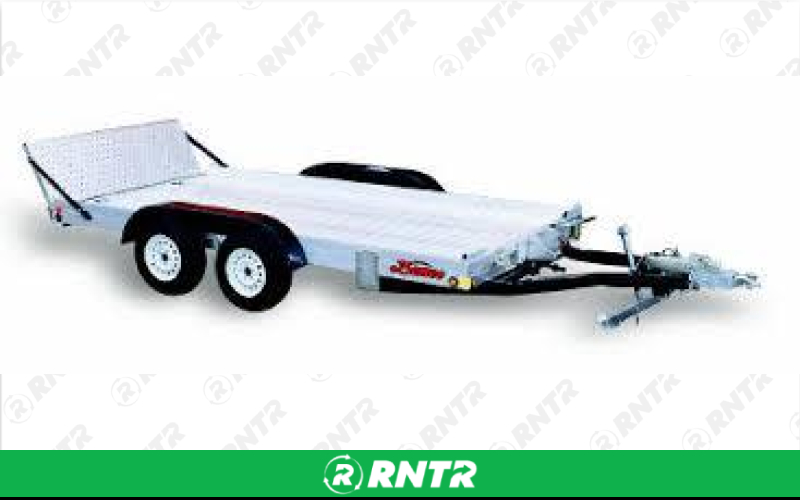
Open Car Trailer (6.5x14, Aluminum)
An aluminum open car trailer in the 6.5x14 size is the workhorse for moving most passenger cars and small SUVs. With a typical max capacity around 5,980 pounds, these trailers are light enough that your tow vehicle doesn't have to work overtime. Look for rentals that include built-in ramps and tie-down rings when browsing on RNTR.
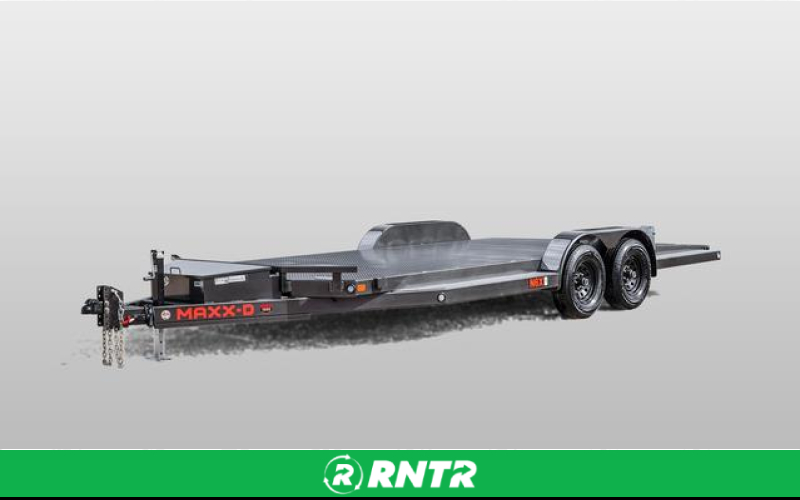
Large Steel Car Trailer (82x22, 7,000 lb)
For heavier vehicles — full-size trucks, large SUVs, or two-vehicle hauls — a steel 82x22 trailer rated at 7,000 pounds gives you the load capacity and deck space you need. Steel construction handles rough loading conditions better than aluminum, making this a solid choice for moving project cars or off-road vehicles. Confirm your tow vehicle's GCWR before renting this size.
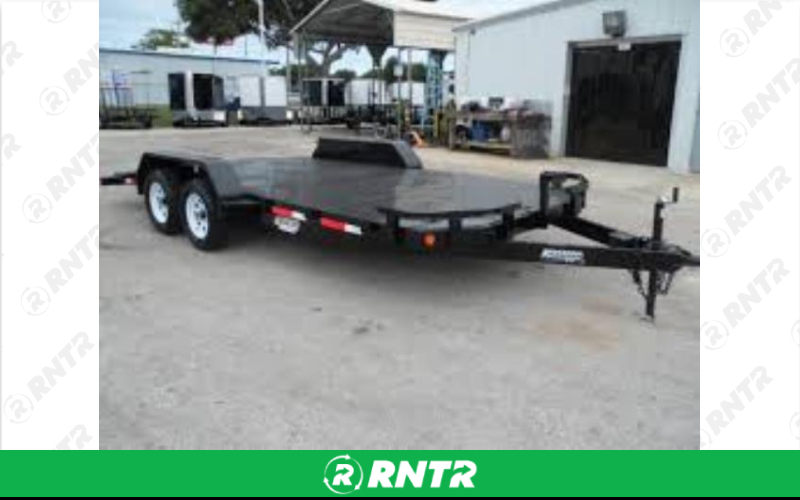
Two-Axle Steel Car Trailer with Ramps
A two-axle trailer distributes weight more evenly than a single-axle unit, which improves stability at highway speeds and reduces sway risk. Built-in loading ramps eliminate the need to source separate ramp equipment, making pickup and loading faster. This configuration is especially useful for low-clearance vehicles that need a shallow ramp angle.
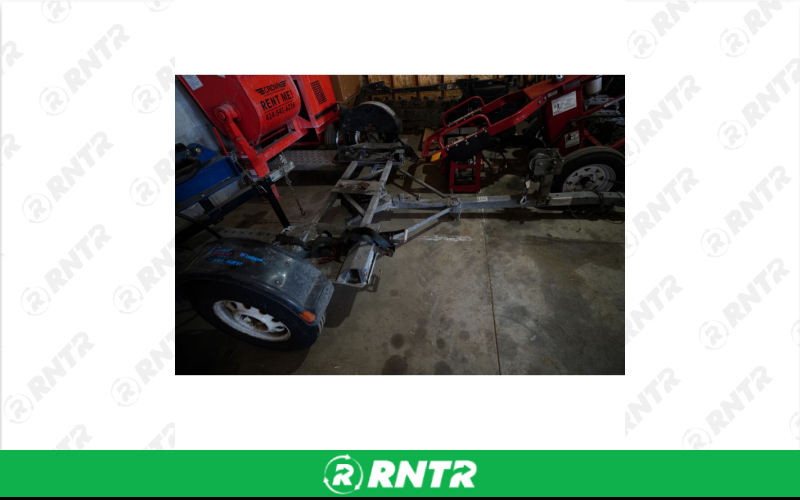
Car Tow Dolly
A tow dolly lifts only the front two wheels of the towed vehicle, making it a compact and more affordable alternative to a full car trailer. It works well for front-wheel-drive vehicles but is not appropriate for all-wheel-drive or rear-wheel-drive cars without drivetrain modifications. Tow dollies are ideal for shorter moves where a full trailer feels like overkill.
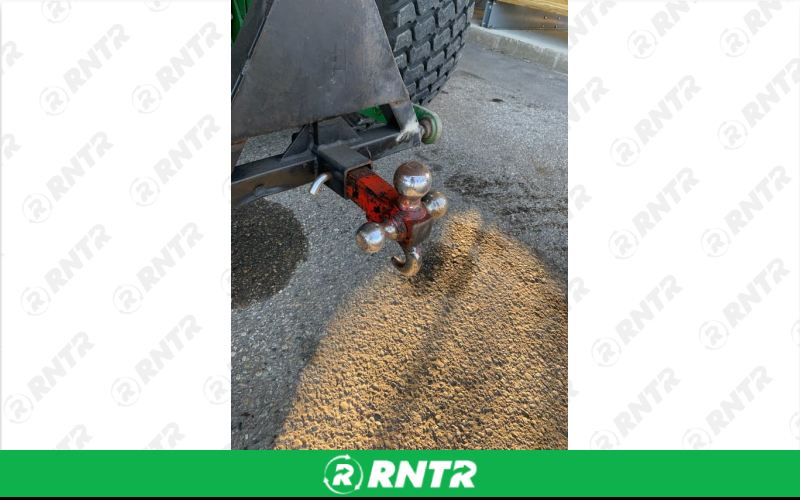
Trailer Hitch Hardware
Without the right hitch ball and receiver setup, you cannot connect any trailer to your tow vehicle. Hitch hardware must match the trailer's coupler size (commonly 2-inch or 2-5/16-inch ball). If your vehicle lacks a receiver hitch, check RNTR listings in your area — some providers rent the hitch hardware separately so you can complete your full setup in a single booking.
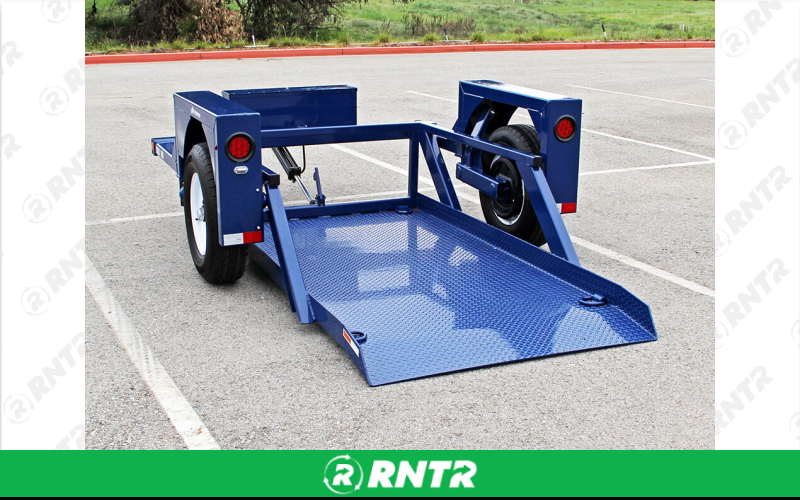
Air Tow Drop Bed Trailer
An air tow drop bed trailer lowers its bed hydraulically to ground level, eliminating the steep ramp angle that causes problems with low-clearance sports cars or damaged vehicles that cannot be driven. This is the right tool when the car being moved has limited ground clearance or cannot move under its own power at all. Rental availability is more limited, so book early through RNTR if you need this option.
Car Trailer Rental Options at a Glance
| Equipment | Category | Typical Daily Rate | Best For |
|---|---|---|---|
| Car Trailer 6.5x14 Aluminum (5,980 lb max) | Open Car Trailer | $60 - $80/day | Passenger cars, small SUVs, lightweight vehicles |
| Car Trailer 82x22 Steel (7,000 lb) | Open Car Trailer | $90 - $120/day | Full-size trucks, large SUVs, heavier builds |
| 2-Axle Steel Car Trailer with Ramps | Open Car Trailer | $75 - $100/day | Stable long-haul towing, low-clearance vehicles |
| Car Tow Dolly | Tow Dolly | $40 - $65/day | Front-wheel-drive cars, short moves |
| Air Tow Drop Bed Trailer | Specialty Car Hauler | $100 - $150/day | Low-clearance sports cars, non-running vehicles |
| 16 ft Equipment / Car Hauler Trailer | Open Car Hauler | $70 - $95/day | Cars plus additional cargo, multi-purpose hauls |
| Trailer Hitch and Ball (Rental) | Hitch Hardware | $15 - $30/day | Vehicles without an existing receiver hitch setup |