
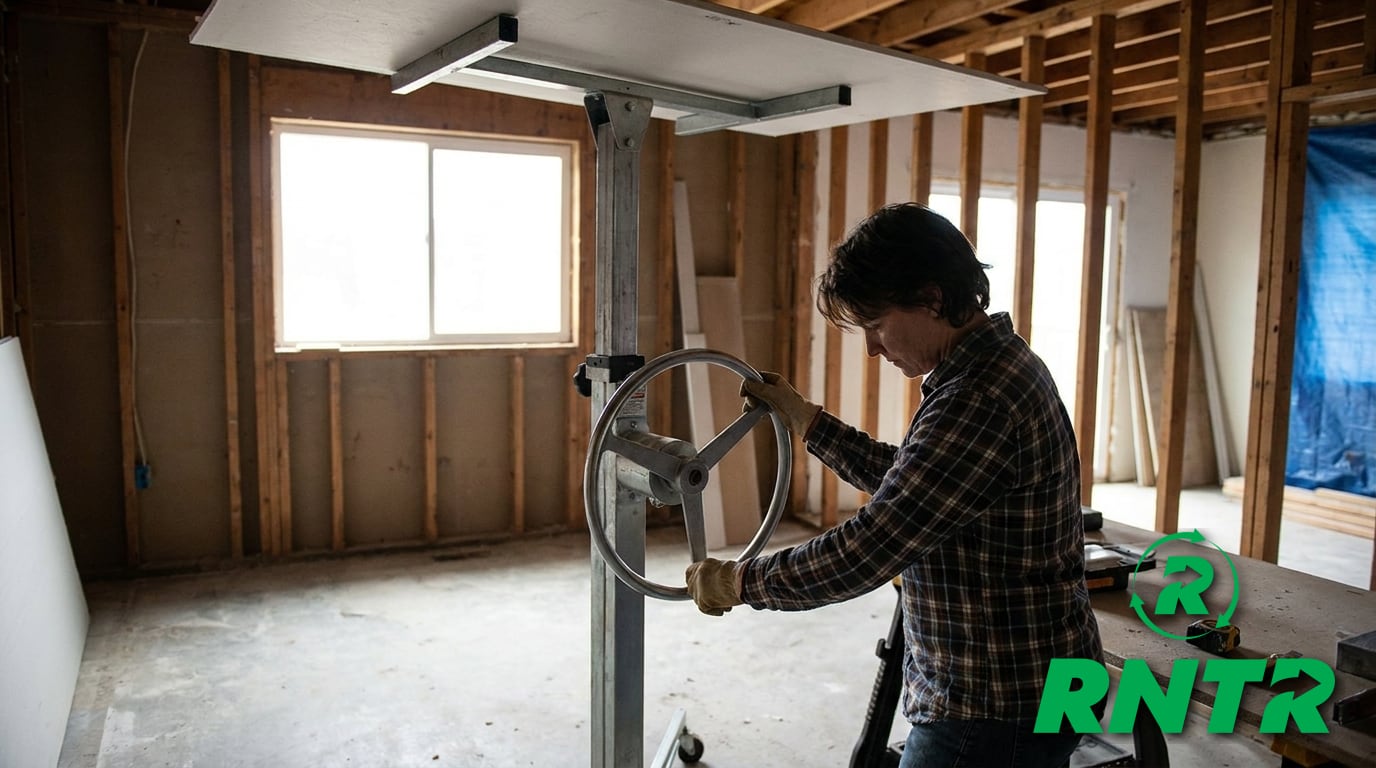
Hang ceilings and walls solo — no aching arms, no extra crew
This guide walks homeowners, DIYers, and small contractors through everything they need to know to rent and operate a drywall lift safely, from setup and loading to raising panels and securing them in place.
Drywall Lift Rental: Frequently Asked Questions
- How much does it cost to rent a drywall lift?
- Drywall lift rentals typically run $40 to $75 per day through local providers on RNTR. Weekly rates are often available if your project spans several days, and renting for a full week usually saves you money compared to paying the daily rate each day. Prices vary by location and lift model, so browse listings in your area to compare.
- Do I need any experience to rent a drywall lift through RNTR?
- No special license or certification is required to rent a drywall lift. The lift is a mechanical tool operated by a hand crank or foot pump, so most beginners can learn the basics in minutes. RNTR's rental providers can answer setup questions at pickup, and this guide covers everything you need to get started safely.
- Can I pick up a drywall lift or does it need to be delivered?
- Most drywall lift listings on RNTR offer pickup from the local provider's location. Some providers also offer delivery for an additional fee. Because the lift breaks down into manageable pieces, it typically fits in a pickup truck bed or a trailer, making self-pickup straightforward for most renters.
- Is a deposit required when renting a drywall lift?
- Many RNTR providers do require a refundable security deposit, which is held at the time of booking and returned when the equipment comes back undamaged and on time. All payments are processed through Stripe-secured checkout, and RNTR's $2,000 damage protection gives both renters and providers added peace of mind.
- How long should I rent a drywall lift for a typical room?
- A standard bedroom or living room ceiling can usually be drywalled in a single day if you are prepared and working steadily. For larger homes or if you are hanging walls and ceilings throughout a whole floor, a two- to three-day rental is more realistic. Planning an extra day as a buffer is a smart move for first-timers.
- What size drywall panels can a rental lift handle?
- Most residential drywall lifts available through RNTR accommodate standard 4x8 and 4x12 sheets of drywall and can raise panels to ceiling heights of 11 to 15 feet. Always check the lift's weight capacity and max height in the listing before booking to make sure it matches your panels and ceiling height.
- Can one person operate a drywall lift?
- Yes, that is the main reason to use one. A drywall lift lets a single person load, raise, position, and hold a panel in place overhead while they fasten it, eliminating the need for a second set of hands. Having a helper nearby for loading heavy sheets is still a good idea, especially for heavier 5/8-inch panels.
What You Need to Rent and Use a Drywall Lift
Drywall Lift
A drywall lift is a freestanding mechanical panel hoist with a cradle that holds a sheet of drywall and raises it to ceiling or upper-wall height, leaving both hands free to drive screws. You need one any time you are hanging drywall above shoulder height, especially on ceilings, where holding a panel overhead quickly becomes exhausting and unsafe. When renting, confirm the lift's maximum height matches your ceiling, check that the cradle tilts for angled installations, and make sure the unit includes a carrying strap or breaks down for easy transport.
You can find drywall lifts for rent from local providers near you on RNTR -- for example, there is a drywall lift available in York, Pennsylvania and another drywall lift rental in Carlisle, Pennsylvania if you are in the mid-Atlantic region. Use RNTR's local search to find the closest available lift in your area.
Drywall Screwgun or Drill
A drywall screwgun or a drill with a dimpler bit drives screws flush without tearing the paper face of the panel. You will need this to fasten each sheet while the lift holds it in position overhead. Look for a corded model for consistent torque on long ceiling runs, or rent a cordless version if you need freedom of movement.
Measuring Tape, Chalk Line, and Pencil
Accurate layout is the difference between seams that land on studs and seams that don't. A chalk line snapped across ceiling joists before you start tells you exactly where each panel edge needs to fall. These are inexpensive to own, but if your rental provider bundles them as accessories, take advantage of it.
T-Square and Utility Knife
Drywall cuts cleanly with a score-and-snap method using a T-square and a sharp utility knife. Having a full-size drywall T-square (48 inches) makes straight cuts fast and accurate. Keep several replacement blades on hand since drywall dulls blades quickly.
Safety Gear
Safety glasses protect your eyes from gypsum dust and falling debris during cutting and fastening. A dust mask or N95 respirator is important when cutting or sanding drywall. Knee pads are helpful when loading the lift cradle from floor level, and work gloves protect your hands from sharp panel edges.
Drywall Lift Rental Options: What to Expect
| Equipment | Lift Height | Typical Daily Rate | Best For |
|---|---|---|---|
| Drywall Lift (11 ft) -- Mount Airy, NC | Up to 11 ft | $40-$55/day | Standard 8-ft residential ceilings |
| Drywall Lift (15 ft) -- Allendale, MI | Up to 15 ft | $55-$75/day | Vaulted ceilings and taller walls |
| Drywall Lift (basic) -- Isanti, MN | Up to 11 ft | $40-$50/day | Budget-conscious DIY ceiling projects |
| Drywall Lift -- York, PA | Up to 11 ft | $45-$60/day | Residential rooms and hallways |
| Drywall Lift -- Carlisle, PA | Up to 11 ft | $45-$60/day | Single-day ceiling installs |
| Scissor Lift (low-level) | Up to 20 ft | $120-$180/day | Working at height on large commercial drywall jobs |
| Man Lift / Personnel Lift | Up to 30+ ft | $150-$250/day | High-bay or commercial drywall and finishing |