
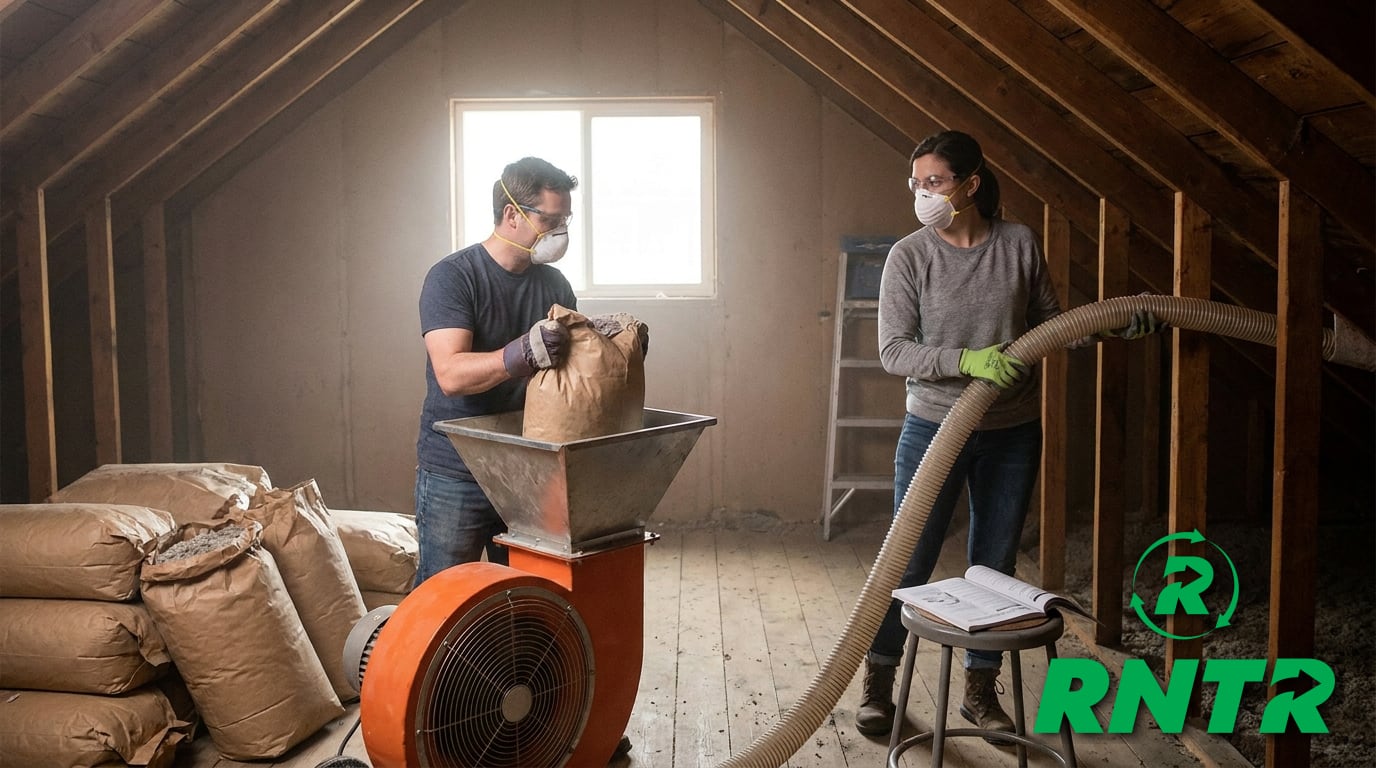
What to know before you climb into the attic with a rented insulation blower
Blown-in insulation is one of the fastest ways to boost a home's R-value, but the job comes with real hazards: airborne fibers, tight attic spaces, hot machinery, and extension cords running near open joists. Whether you're topping off an attic with cellulose or blowing fiberglass into wall cavities, insulation blower safety starts before you ever turn the machine on. This guide covers the PPE, attic prep, and blower handling techniques that keep DIYers and small contractors safe, plus what to expect when you book an insulation blower rental near you.
Insulation Blower Rental Questions Homeowners Ask
- How much does it cost to rent an insulation blower per day?
- Most insulation blowers rent for $75 to $150 per day depending on hopper size and horsepower, with weekly rates often running two to three times the daily price rather than seven. A basic single-operator unit like a Cyclone Insulation Blower sits at the lower end, while larger commercial-grade blowers cost more but move material faster, which can save you a day of labor on bigger attics.
- Does the rental include the hose, remote control, and safety gear?
- Most providers include the blower hose, usually 100 to 150 feet, and a remote control unit so a second person can adjust flow from the attic. PPE like respirators, goggles, and gloves is typically not included, so plan to bring or buy your own before pickup.
- Should I rent a ladder along with the insulation blower for attic access?
- Yes, if you don't already own a sturdy ladder rated for attic work. A 12-foot fiberglass ladder or a taller 20-foot fiberglass extension ladder gives you non-conductive, stable footing, which matters when you're also running an extension cord near the attic hatch.
- What's the difference between renting a cellulose blower and a fiberglass blower?
- Cellulose blowers use a paddle agitator to break up recycled paper fiber, while fiberglass loose-fill blowers use a different feed mechanism to fluff glass fiber without excessive dust. Cellulose insulation safety concerns center on paper dust and fire-retardant chemical exposure, while fiberglass insulation safety focuses on skin and eye irritation from glass fibers. Ask the rental provider which material the machine is calibrated for before booking.
- How long does a typical insulation blower rental last?
- Most attic jobs wrap up in a single 4 to 8 hour rental day, but providers usually book by the full day or weekend. If you're insulating a larger home or multiple buildings, ask about extending the rental; a unit like the Cyclone Insulation Blower in Tullahoma can often be held an extra day for a prorated fee.
- Is a deposit required to rent an insulation blower?
- Yes. Expect a refundable deposit ranging from $50 to $300 depending on the equipment value, either held on a credit card or collected as cash. The deposit is returned after the provider inspects the hose and hopper for damage.
- Can I have the insulation blower delivered instead of picking it up?
- Many local providers offer delivery for an extra fee, which is worth it given how bulky these units and their hoses are. Use a local equipment search guide to find providers near your zip code who offer delivery and check same-day availability.
PPE and Attic Prep: The Foundation of Insulation Installation Safety
Insulation Blower Operation, Electrical, and Ventilation Safety
Electrical safety runs parallel to blown in insulation safety on nearly every job. Insulation blowers draw significant amperage, so use a heavy-gauge extension cord rated for the distance and plug into a GFCI-protected outlet whenever possible, especially if the machine sits near a garage door or outdoor power source. These same extension cord and GFCI habits apply broadly to power equipment used near people and tight spaces, which we cover in more depth in our pressure washer electrical safety guide.
Attic safety also means managing heat. Attics trap warmth quickly, especially in summer, so take breaks, stay hydrated, and never run a gas-powered blower motor in an enclosed space due to carbon monoxide risk. If you're transporting a larger blower unit to a job site on a trailer, review basic load securing and hitch safety in our trailer towing guide before you hit the road.
Comparing Insulation Blower Rental Options
| Blower Type | Best For | Typical Daily Rate | PPE Needed | Key Safety Consideration |
|---|---|---|---|---|
Cellulose Insulation Blower (single hopper) | Attic top-offs, small additions | $75 - $125/day | P100 respirator, goggles, gloves | Paper dust and fire retardant exposure; keep hopper lid closed between loads. Example: Insulation Blower 4 |
Larger Cyclone Insulation Blower (2-5 series) | Whole-attic jobs, wall cavities, commercial | $100 - $160/day | Full-face respirator, coveralls, hearing protection | Heavier hose requires two-person handling and firm grip at startup. Example: Cyclone Insulation Blower 4 or Cyclone Insulation Blower 5 |
Fiberglass Loose-Fill Blower | Fiberglass batt/loose-fill attic insulation | $85 - $140/day | Long sleeves, gloves, sealed safety goggles | Glass fiber can irritate skin and eyes; shower and change clothes after use |
Gas-Powered Straw Blower | Erosion control, landscaping mulch (not attic insulation) | $90 - $140/day | Hearing protection, goggles, gloves | Engine exhaust requires outdoor use only. Example: 18 HP Gas-Powered Straw Blower |