
Compare trailer types, understand real rental costs, and choose the right option for your next project or move.
Not all hauling jobs are the same, and the trailer you choose can make a significant difference in how smoothly your project goes. Open trailers are versatile, affordable, and easy to load. Enclosed trailers offer weather protection, security, and a clean look for cargo that needs to stay dry or secure. This guide breaks down the key differences between open and enclosed trailers so you can make the right call before you book your rental.
Common Questions About Renting Open vs. Enclosed Trailers
- How much does it cost to rent an open trailer per day?
- Open trailer rental rates typically range from $40 to $80 per day depending on size and location. Smaller 5x8 or 5x10 utility trailers usually fall on the lower end, while larger dual-axle open trailers (7x14 or 7x16) may run $60 to $100 per day. Weekly rates often provide better value if you need the trailer for a multi-day project.
- How much does it cost to rent an enclosed trailer per day?
- Enclosed trailer rentals generally cost $80 to $150 per day, with larger cargo trailers (14 to 16 feet) at the higher end of that range. The added cost reflects the enclosed structure, which protects your cargo from weather and theft. Some rental providers also offer weekly rates that reduce the daily average significantly.
- Do I need a special license or hitch to rent a trailer?
- Most standard utility and cargo trailers require a standard Class III hitch receiver and a 2-inch or 2-5/16-inch ball mount. No special license is typically required for trailers under a certain gross vehicle weight rating (GVWR), though requirements vary by state. When you book through Rntr, the rental provider will confirm hitch and wiring requirements so you arrive prepared.
- Is a deposit required when renting a trailer?
- Yes, most trailer rental providers require a refundable security deposit, typically ranging from $100 to $300 depending on the trailer size and value. The deposit is returned when the trailer is brought back undamaged and on time. Credit card holds are common, so having a card available at pickup is recommended.
- Can I pick up a rented trailer or does it need to be delivered?
- Most trailer rentals on Rntr are pickup-based, meaning you drive your tow vehicle to the rental provider's location and hitch up the trailer yourself. Some providers in select markets may offer delivery for an additional fee. Availability varies by location, so check each listing for pickup and delivery options.
- What size trailer do I need for a home move or large project?
- For a partial home move or hauling furniture, a 5x10 or 6x12 open trailer often handles smaller loads. A 7x14 or 7x16 open trailer is better for larger hauls, yard debris, or construction materials. If you're moving appliances, boxes, or items that need weather protection, a 14 to 16-foot enclosed trailer is a solid choice. Rntr listings include dimensions and weight capacity so you can match the trailer to your specific load.
- How far in advance should I reserve a trailer rental?
- For weekend moves or projects, booking 1 to 3 days in advance is recommended, especially for popular sizes like 5x10 open trailers or 14-foot enclosed trailers. During peak seasons such as summer and early fall, local inventory can get tight. Booking through Rntr lets you check real-time availability and confirm your reservation directly with the local provider.
Understanding the Two Main Trailer Types
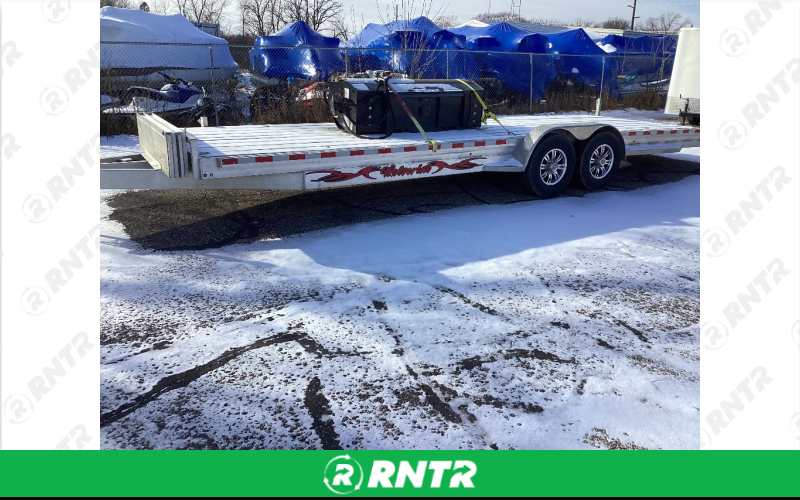
Open trailers (also called utility trailers or flatbed trailers) have a flat deck with side rails or mesh sides but no roof. They're easy to load from any angle, highly versatile, and typically less expensive to rent. Common sizes range from compact 5x8 models up to 7x16 dual-axle trailers capable of carrying thousands of pounds.
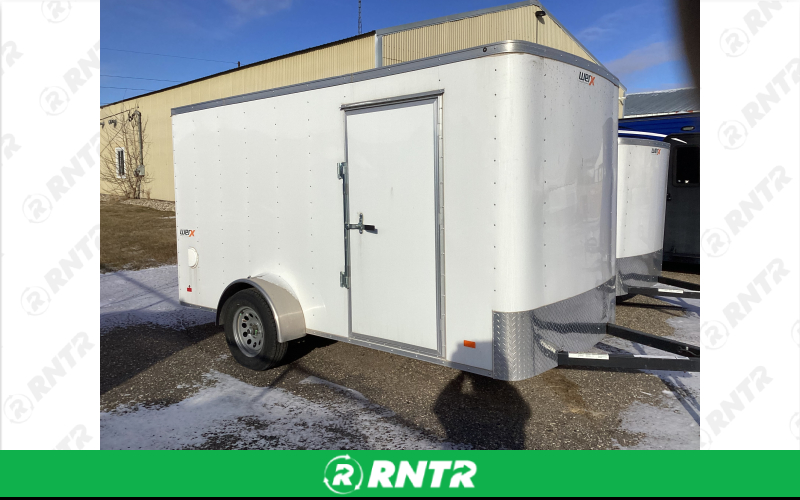
Enclosed trailers (also called cargo trailers) are fully boxed in with solid walls, a roof, and a lockable door. They function like a rolling storage unit. Standard rental sizes start around 5x8 and scale up to 14-foot and 16-foot options, which are popular for larger moves and equipment transport.
For straightforward landscaping work, yard debris, or hauling ATVs and outdoor equipment, open trailers are usually the practical choice. For furniture moves, catering supplies, display equipment, or anything that can't get wet or shouldn't be visible to passersby, enclosed trailers are worth the extra rental cost.
If your project involves heavy earthmoving or debris removal, it's also worth looking at dump trailer options for landscaping, which offer a completely different loading and unloading experience.
Open Trailer Benefits: When a Utility Trailer Is the Right Call
Easier loading and unloading. With no walls or roof overhead, you can load from the sides, back, or even use a forklift or equipment with an overhead reach. Many open utility trailers also include a rear ramp for rolling on lawn mowers, motorcycles, or pallets.
Lower rental cost. Open trailers typically rent for $40 to $80 per day, making them one of the most cost-effective ways to haul significant loads. For a weekend landscaping project or a single-day equipment move, the savings over an enclosed trailer can be meaningful.
Better for oversized or awkward loads. Lumber, pipe, large equipment, and building materials often don't fit inside a box trailer. Open trailers handle those loads without the geometry headache.
Lighter tow weight. Without the enclosed shell, open trailers weigh less, which can be relevant if your tow vehicle has a moderate tow rating. Less tongue weight also tends to make the rig easier to back into tight spots.
For reference, a 5x10 open utility trailer in Johnson City, TN or a 7x16 utility trailer represent the range you'll commonly find available through local rental providers on Rntr.
Open trailers work well for: landscaping debris, construction site cleanup, moving outdoor furniture and equipment, hauling dirt or mulch with the right side rails, transporting recreational vehicles and trailers.
Enclosed Trailer Benefits: When Protection and Security Matter
Weather protection. Rain, dust, and road debris stay outside. For household moves, electronics, catering gear, or anything with a finished surface, an enclosed trailer keeps cargo in the same condition it left in.
Security. Enclosed trailers lock, which means cargo left overnight or in a parking lot is not visible or accessible to opportunistic theft. For contractors leaving a trailer on a job site or event planners storing supplies between setup days, this is a genuine practical benefit.
Clean and professional presentation. Moving furniture or event supplies in an enclosed trailer looks more professional and keeps items from collecting road grime. Some rental providers offer enclosed cargo trailers specifically sized for residential moves or vendor setups.
Better for long-distance hauls. Over several hundred miles, weather exposure on an open trailer can damage furniture, boxes, and electronics even with tarps. An enclosed trailer removes that risk entirely.
Enclosed trailers are ideal for: household moves, catering and event supply transport, trade show or vendor booth moves, contractor tool transport, moving fragile or weather-sensitive items.
For a larger enclosed option, the 14-foot enclosed trailer available in Allendale, MI is a good example of what's available through local providers on Rntr for full-room moves or significant equipment transport.
Open Trailer vs. Enclosed Trailer: Side-by-Side Comparison
Use this comparison to quickly identify which trailer type fits your specific hauling situation. Rental pricing reflects typical daily rates from local providers.
| Feature | Open Trailer | Enclosed Trailer |
|---|---|---|
| Typical Daily Rental Cost | $40 – $80 | $80 – $150 |
| Weather Protection | None (tarps required) | Full protection from rain and road debris |
| Cargo Security | Low (visible, no lock) | High (lockable, cargo hidden) |
| Loading Flexibility | High (load from all sides) | Limited to rear or side doors |
| Tow Vehicle Weight Impact | Lighter (easier tow) | Heavier (enclosed shell adds weight) |
| Best For | Landscaping, equipment, construction materials | Moves, event supplies, fragile or weather-sensitive cargo |
| Oversized Load Handling | Excellent (no roof clearance limit) | Limited by interior height and width |
| Common Rental Sizes | 5x8, 5x10, 7x14, 7x16 | 5x8, 6x12, 7x14, 14 ft, 16 ft |
| Requires Straps/Tie-Downs | Yes (always) | Yes (but less exposure risk) |
| Overnight Parking Suitability | Lower (theft and weather risk) | Higher (locked and weatherproof) |
Choosing the Right Trailer Size for Your Job
5x8 trailers are the entry point. They work for single-room moves, hauling a riding mower, or transporting a small load of mulch or soil. Easy to tow with most mid-size SUVs and trucks.
5x10 trailers add a bit more length and are a popular all-purpose size. Good for a small apartment move, equipment delivery, or a larger landscaping haul. A 5x10 open utility trailer with ramp in Allendale, MI is a solid example of what this size looks like in practice.
7x14 and 7x16 trailers are for serious hauling. Two-axle designs handle heavier loads and distribute weight more evenly. They're the right choice for full home moves, contractor equipment transport, or hauling multiple pieces of outdoor power equipment at once.
14-foot and 16-foot enclosed trailers are the workhorses of residential moves. They hold furniture from two to three rooms comfortably and provide the weather and security protection that smaller moves also benefit from.
When in doubt, size up by one. The marginal cost difference between trailer sizes is usually small, and having extra space reduces the stress of fitting everything in.
What to Check Before You Pick Up a Rental Trailer
Confirm your hitch setup. Most utility trailers use a 2-inch ball mount. Some larger trailers require a 2-5/16-inch ball. Check the listing details and verify your hitch ball size before arriving. The wrong ball size is an immediate safety problem.
Check your vehicle's tow rating. Tow ratings are listed in your owner's manual or on the driver's door jamb sticker. A loaded 7x14 dual-axle trailer can weigh 4,000 to 6,000 pounds depending on cargo. Know your truck or SUV's limits.
Verify lighting connections. Trailers use 4-flat or 7-round wiring connectors. Most tow vehicles support 4-flat for smaller trailers and 7-round for larger ones. Bring an adapter if needed or ask the rental provider whether one is included.
Inspect the trailer at pickup. Walk around the trailer with the provider and note any existing damage before you leave. Check tire pressure, lights, and the condition of tie-down rings or ramp hardware.
Bring straps and padding. Whether you're using an open or enclosed trailer, proper tie-downs are your responsibility. Moving blankets are worth bringing for any enclosed trailer move involving furniture.